



Why Safety Culture and Psychological Well-Being Must Be Core to Modern Workplaces
In times of widespread uncertainty, the workplace has the potential to be either a stabilizing force or an additional source of harm. For many adults, work is where they spend the majority of their waking hours. A psychologically safe workplace offers something essential. It offers predictability, fairness, and support. It sends the message that people are valued not just for their output, but for their humanity. Here, we dig into what it takes to establish psychological safety in the workplace for everyone.
Psychological Safety at Work: 5 Trauma-Informed Ways Leaders Can Help Employees Feel Valued, Seen, and Secure
Psychological safety is not a perk. It is the foundation of trust, engagement, and sustainable performance at work. This article explores five trauma-informed conditions employees need to feel safe, seen, and valued, along with practical strategies leaders can use to build healthier, more resilient workplaces in today’s high-stress world.

The Trauma-Informed Workplace: Why 2026 Is the Year Organizations Can No Longer Afford to Ignore It
Workplace burnout, turnover, and disengagement have reached crisis levels. Discover what a trauma-informed workplace looks like, why it matters in 2026, and how organizations can adopt practices that drive retention, well-being, and sustainable culture.

Calling all Corporate Leaders: Why companies are investing in Trauma-Informed Workplace Training
In today's rapidly evolving corporate landscape, leaders face unprecedented challenges. From navigating the complexities of mental health to addressing the nuances of DEI, the modern workplace demands a more empathetic and informed approach. Trauma-informed training emerges as a pivotal strategy, not just as a compassionate initiative but as a critical investment in organizational resilience and success.

Developing Trauma-Informed Teachers
An Educational Book Series from Resilient Futures
[July 2022] Co-edited by Resilient Futures founder Megan Brennan, this volume of the series Contemporary Perspectives on Developing Trauma-Informed Teachers provides reflections, examples, and implementation guidance for the innovative and important ways educators develop and implement trauma-informed practices across their programs, instituting broader curricular shifts to incorporate trauma-informed practices.
[January 2023] Co-edited by Resilient Futures founder Megan Brennan, this volume of the series was driven by a deep desire to ensure that teacher candidates are thoughtfully prepared to more fully address students’ needs and create classroom environments that are safe for students and teachers.

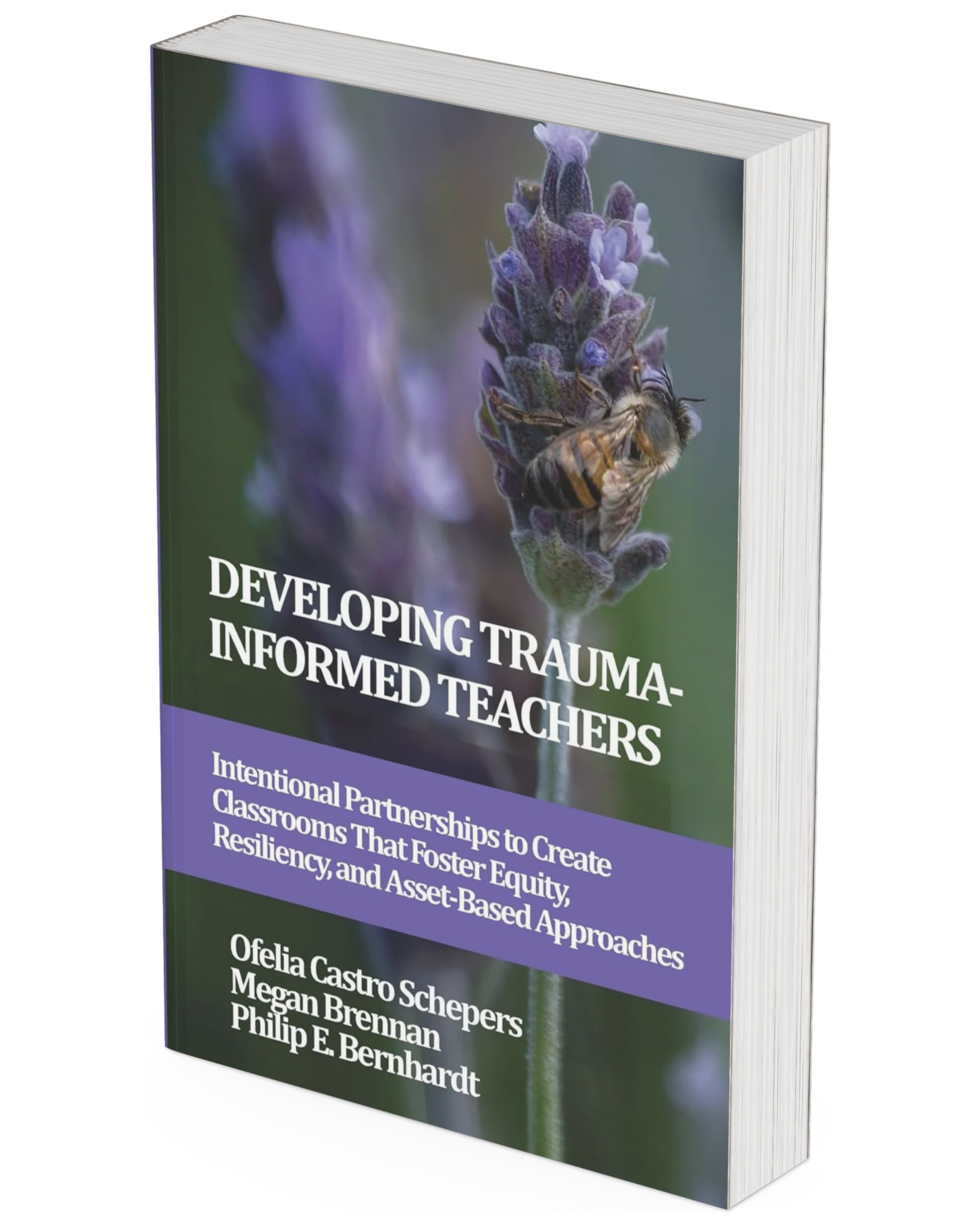
Developing Trauma-Informed Teachers: Intentional Partnerships to Create Classrooms That Foster Equity, Resiliency, and Asset-Based Approaches
[May 2025] Co-edited by Resilient Futures founder Megan Brennan, this volume of the series we delves into the heart of educational evolution: Intentional Partnerships to Create Classrooms that Foster Equity, Resiliency, and Asset-Based Approaches.
Childhood Trauma:
An event(s) that a child finds overwhelmingly distressing or emotionally painful, often resulting in lasting mental and physical effects.
Many think of trauma as a single life-changing event, but more commonly trauma manifests as a series of events or patterns of abusive or neglectful behaviors that compound over time.
Understanding Childhood Trauma

In the Press

Give to further our Mission
More than ever, our schools and youth-serving communities are in need of trauma-informed education, training, and resources. Your tax-deductible gift will directly fund our program expansion efforts, enabling us to provide trauma-informed training and resources to a greater number of educators, schools, and youth-serving organizations.
Interested in learning more about our Trauma-Informed Futures© Programming & Services?